
Beyond MDR: How Merchant Acquirers Can Grow When Fees Are Capped
As regulators cap merchant fees and limit surcharging, acquirers need to grow beyond MDR. Kai Merchant turns the payment device into a channel for merchant services.
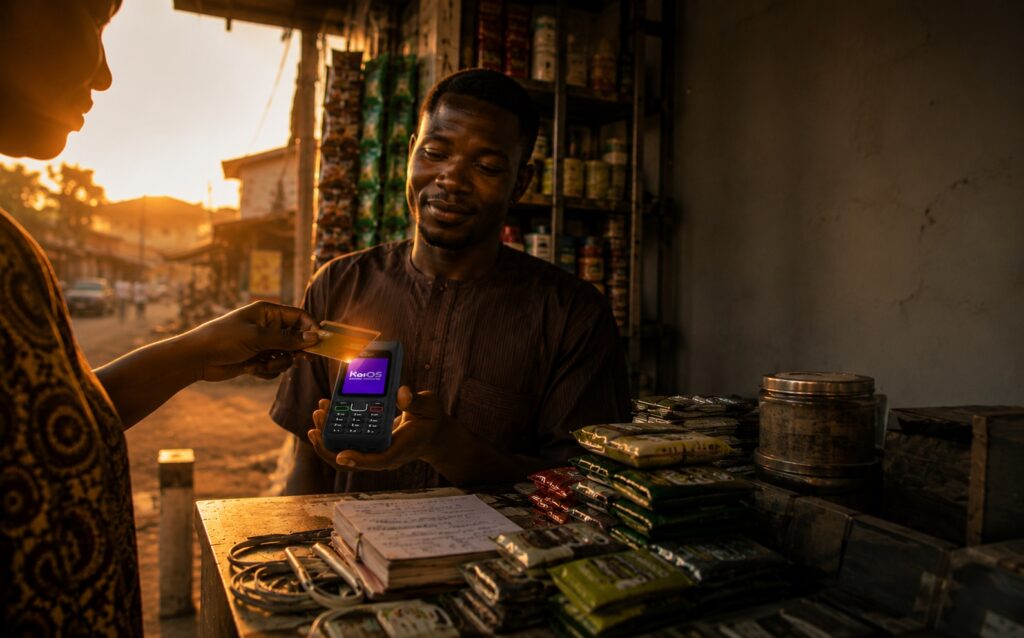
As regulators lower merchant service charges and restrict surcharging, the next growth model for merchant acquiring has to be built beyond the transaction.
The price of acceptance is becoming a policy decision
Across markets, the economics of payment acceptance are changing. Regulators are setting or reducing merchant fees, limiting the ability to pass costs to consumers, and increasing scrutiny of interchange and surcharging. The policy choices differ, but the direction is consistent: payment acceptance is becoming less able to rely on a percentage of transaction value alone.
For acquirers and payment facilitators, this is not simply another pricing cycle. It changes the unit economics of serving the merchants who are often the most expensive to reach: micro and small businesses with low ticket sizes, variable connectivity and limited capacity to absorb new costs.
Small tickets expose the problem
The headline MDR is not the number that determines whether the model works. What matters is the value generated by the transactions that actually occur. On a low-value purchase, even a seemingly reasonable percentage fee can leave only a few cents to cover processing, terminal deployment, support, risk operations and merchant service.
That pressure is especially acute for micro-merchants. When the merchant cannot absorb more cost, the consumer is protected from surcharges and regulated fees are falling, an acceptance-only model has nowhere left to go.
The opportunity is beyond the transaction
The answer is not to abandon merchant acceptance. It is to treat it as the starting point of a broader merchant relationship. Small businesses need more than a way to take a card payment. They need practical tools for managing cash flow, ordering stock, paying bills, selling airtime, building customer loyalty and creating records that can support access to credit.
For payment providers, those services create value that is not tied only to basis points. In mature acquiring markets, value-added services have already become an important growth driver. In emerging markets, regulation is accelerating the same shift.
Why the device matters
Every service that extends the merchant relationship has to reach the merchant somehow. The payment device is therefore more than a terminal. It is the distribution channel for the services that make the relationship valuable.
Kai Merchant combines a connected, programmable device with payment acceptance and merchant services, enabling partners to deploy software-based services to an installed base. Acceptance remains essential, but it becomes the entry point for a broader offering rather than the full product.
From accepting payments to serving businesses
A payment provider can use the merchant relationship to offer services that support how a business operates: working-capital offers informed by observed turnover, supplier ordering, bill payment, airtime, loyalty and business records. The exact mix will vary by market and partner, but the principle is consistent: new services should be deployable as software, not dependent on another hardware rollout.
- For merchants: a more useful business tool, not another fixed-cost terminal.
- For acquirers and payfacs: additional routes to revenue and stronger merchant relationships.
- For markets: a more realistic way to expand formal, secure digital acceptance to smaller businesses.
What comes after MDR
Regulated MDR does not make the margin challenge disappear. It makes the challenge more urgent. Providers whose economics depend only on transaction value will face pressure as rules evolve. Providers that use the payment device to deliver services merchants value have another way to build a sustainable model.
The rate may no longer be yours to set. What you put on the merchant device still is.
Original source: When the Regulator Sets Your Price: What Comes After MDR, KaiOS Technologies on LinkedIn.
Sources
- Nigeria’s New Banking Charges Framework: What Every Client Needs to Know, Candide-Johnson Law Practice, 2026.
- Review of Merchant Card Payment Costs and Surcharging, Reserve Bank of Australia, March 2026.
- Why Merchants Still Choose Cash in Sub-Saharan Africa, CGAP, 26 September 2025.
- Merchant acquiring and the $100 billion opportunity in small business, McKinsey & Company, 11 October 2021.
- As ISVs disrupt payments, can merchant acquirers stay relevant?, McKinsey & Company.